
Isolation Kits for Dissimilar Metals: The Galvanic Corrosion Math Most Specs Get Wrong
Most specifications treat galvanic corrosion as a simple lookup problem: find the two metals on a galvanic series chart, and size an isolation solution accordingly. That approach misses the variables that actually determine how fast corrosion happens at a dissimilar metal connection. Isolation kits for dissimilar metals need to account for surface area ratio, electrolyte exposure, and connection geometry, not just which two metals are present.
Why the Galvanic Series Chart Alone Is Not Enough?
The distance between two metals on a galvanic series chart indicates corrosion potential, but it says nothing about how fast that corrosion will actually progress in a specific installation. A small cathodic metal surface paired with a large anodic surface accelerates corrosion dramatically compared to the reverse ratio, which most basic specs never account for.
Proper isolation kits for dissimilar metals are selected based on the actual surface area relationship at the connection, not just the theoretical voltage difference between the two materials involved.
Surface Area Ratio Changes Everything
A small anode connected to a large cathode corrodes disproportionately fast because all the galvanic current concentrates on that limited anodic area. This is why bolt and stud isolation often matters more than flange face isolation in certain dissimilar metal connections.
Where Isolation Kits for Bolts Become Critical?
Flange gaskets are not the only isolation point that matters. Isolation kits for bolts address a connection point that is frequently overlooked, since a properly isolated flange face paired with non-isolated steel bolts can still create a galvanic path directly through the fastener itself.
This gap is common in retrofit situations where a flange gasket was upgraded for isolation, but the original carbon steel bolts were left in place, defeating a portion of the isolation the new gasket was installed to provide.
Why Sleeves and Washers Complete the Circuit Break?
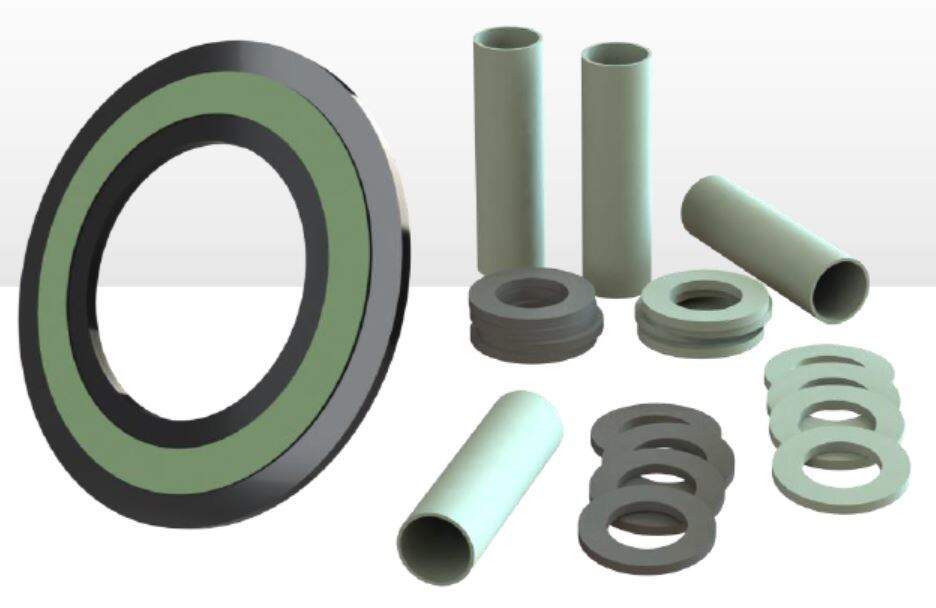
A bolt isolated only at the gasket face but still making metal-to-metal contact through the nut and washer stack has not actually achieved isolation. Full isolation requires sleeves through the bolt holes and washers under both the nut and bolt head.
Pipeline Applications Where This Matters Most
An insulating gasket for pipeline connections between dissimilar pipe materials, such as steel transitioning to a different alloy, needs to isolate the entire connection assembly, not just the primary sealing surface. Electrolyte exposure from soil moisture, produced water, or coastal humidity accelerates whatever galvanic path remains unaddressed.
Step-Ko engineers isolation kits around the complete connection, sleeves, washers, and gasket together, specifically because partial isolation at a dissimilar metal joint often performs worse than no isolation attempt at all, since it can create a false sense of protection.
Get Isolation That Accounts for the Whole Connection
Step-Ko's research and development team looks at the complete galvanic picture, surface area ratio, electrolyte exposure, and every contact point in the assembly before recommending an isolation kit for dissimilar metal connections. With ISO 9001-certified manufacturing behind every gasket, sleeve, and washer, you get a matched system engineered around your actual installation, not a generic chart lookup. Contact our team and get isolation sized for the real corrosion math at your connection.
FAQs
Q: Why isn't the galvanic series chart enough to size an isolation kit?
A: The chart shows corrosion potential between two metals but does not account for surface area ratio, electrolyte exposure, or connection geometry, all of which affect how fast corrosion actually occurs.
Q: How does surface area ratio affect galvanic corrosion speed?
A: A small anodic surface paired with a large cathodic surface corrodes much faster than the reverse ratio, since galvanic current concentrates on the smaller anodic area.
Q: Why do isolation kits for bolts matter as much as flange gasket isolation?
A: An isolated gasket paired with non-isolated steel bolts can still create a galvanic path directly through the fastener, defeating part of the isolation the gasket was meant to provide.
Q: What components make up a complete bolt isolation assembly?
A: Full isolation requires a sleeve through each bolt hole along with washers under both the nut and bolt head, not just an isolated gasket at the flange face.
Q: Can partial isolation at a dissimilar metal connection be worse than no isolation at all?
A: Yes. Partial isolation can create a false sense of protection while an unaddressed contact point continues corroding, sometimes faster than an unprotected connection that receives proper monitoring.