
High Temperature Gasket Failure: What Actually Gives Out First When the Heat Climbs
Gasket failure at elevated temperature is rarely a sudden event. It is usually a sequence, one property degrading first, followed by a chain reaction that eventually shows up as a leak or a loss of seal integrity. Understanding what actually fails first in a high temperature gaskethelps identify early warning signs before a connection reaches the point of visible failure.
Compressibility Loss Is Usually the First Sign
Long before a high temperature flange gasketactually leaks, it typically loses compressibility. Repeated thermal cycling causes the gasket material to relax and lose its ability to maintain consistent sealing pressure against the flange face, which is the first measurable step toward eventual failure.
This is why gasket relaxation should be checked during scheduled maintenance rather than waiting for a visible leak, since compressibility loss can often be identified and addressed before it progresses to a sealing failure.
Why Thermal Cycling Is Worse Than Constant Heat?
A gasket held at a stable elevated temperature generally performs more predictably than one subjected to repeated heating and cooling cycles, since the expansion and contraction stress of cycling accelerates material fatigue beyond what constant temperature exposure alone would cause.
Chemical Breakdown of the Gasket Material Itself
Beyond mechanical relaxation, sustained high heat can chemically degrade certain gasket materials, particularly if a high temperature gasket sealantwas not correctly matched to the specific chemical environment inside the line. Degraded material becomes brittle, loses its sealing properties, and can crack under normal operating pressure.
This is why material selection matters as much as temperature rating alone. A gasket rated for a given temperature in a clean service environment may degrade faster in a line carrying aggressive chemicals at the same temperature.
Why Torque Retention Drops as Temperature Rises?
As gasket material relaxes under heat, the bolted connection's effective torque retention drops even though the bolts themselves have not physically loosened. This is a common but frequently overlooked contributor to eventual seal failure at elevated temperatures.
Building In Margin Before the Failure Point
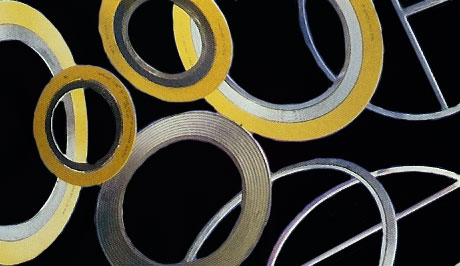
A properly specified high temperature gasketshould have margin above the expected operating temperature, not be selected at the exact edge of its rated limit. Step-Ko's Assureaseal HT critical service gaskets are engineered specifically for elevated heat environments where pressure retention combined with thermal resistance is critical to avoiding the compressibility loss and chemical breakdown that cause most high temperature seal failures.
Specify a Gasket With Real Margin, Not Just a Rated Number
Step-Ko has manufactured critical service gaskets in-house since 2000, with every product backed by ISO 9001-certified quality control and rigorous testing before it ever leaves our facility. Our Assureaseal HT gaskets are engineered with real margin above rated temperature, not sized to the exact edge of failure. Speak with our team about your specific thermal cycling conditions and get a gasket built to outlast the heat, not just survive it once.
FAQs
Q: What is usually the first sign of high temperature gasket failure?
A: Compressibility loss is typically the earliest indicator, occurring before any visible leak, as repeated thermal cycling causes the material to relax and lose consistent sealing pressure.
Q: Is constant high heat worse than repeated temperature cycling for gaskets?
A: Generally the opposite. Repeated heating and cooling cycles create more material fatigue than a stable elevated temperature, making thermal cycling a more significant failure driver.
Q: Can chemical exposure cause a high temperature gasket to fail faster than its rating suggests?
A: Yes. A gasket rated for a given temperature in a clean environment may degrade faster if the chemical composition of the line was not accounted for in material selection.
Q: Does gasket relaxation actually loosen the bolted connection?
A: Not physically, but effective torque retention drops as the gasket material relaxes under heat, which reduces sealing pressure even though the bolts have not mechanically loosened.
Q: How much temperature margin should be built into a high temperature gasket specification?
A: Gaskets should generally be specified with margin above the expected maximum operating temperature rather than selected at the exact edge of the rated limit, to account for thermal cycling and material aging.