
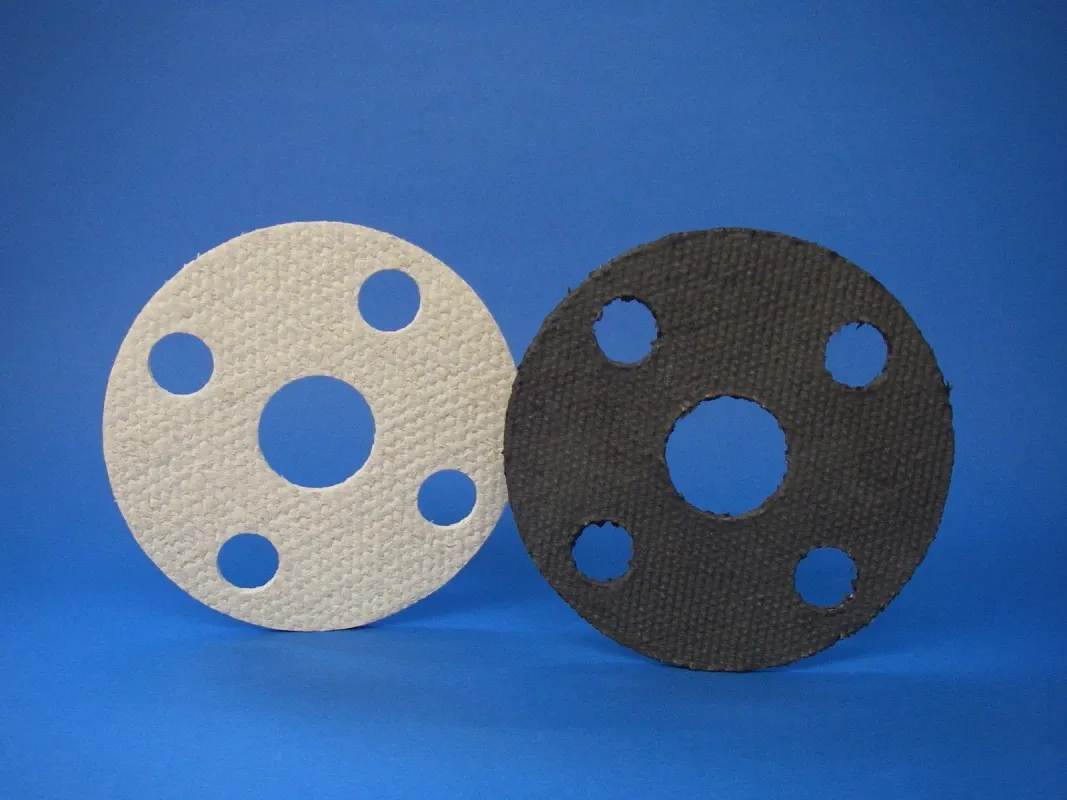
How to Select the Right High-Temperature Gasket for Your Flange Application
Industrial flange connections require reliable sealing under demanding operating conditions. Choosing a high-temperature gasket involves evaluating pressure, material compatibility, and flange design. Incorrect specifications can affect sealing performance and increase the risk of equipment leaks.
Different applications require different sealing solutions. Therefore, buyers must understand their system's requirements before selecting a product. Step-Ko Products manufactures specialized industrial gasket solutions that help facilities address demanding sealing conditions while supporting equipment reliability and operational safety across critical industrial systems.
Identify Your Flange Application Requirements
Every flange connection has specific operating requirements. Before comparing gasket materials, determine how the connection functions under normal and maximum operating conditions.
Consider these essential factors:
Temperature range: Identify normal operating temperatures and possible heat spikes.
Pressure rating: Confirm the connection's required pressure classification.
Process media: Check compatibility with transported fluids or chemicals.
Flange condition: Examine surfaces for damage, distortion, or irregularities.
Understanding these details helps narrow available options and prevents selecting unsuitable sealing components.
Compare High-Temperature Gasket Materials
Material selection directly influences sealing performance. Some conventional materials deteriorate when exposed to excessive heat, while specialized composites provide greater thermal stability.
Step-Ko Products offers the Assureaseal Cathodic Isolation Gasket, manufactured using proprietary CBS 3111 glass epoxy material. According to the manufacturer, this material maintains structural stability at temperatures exceeding 400°F.
What Makes a High-Temperature Gasket Suitable?
A suitable high-temperature gasket must provide the required compression resistance, dimensional stability, and material compatibility.
However, the temperature resistance of one component does not establish the operating limit of the complete assembly. Buyers should verify the ratings of both the gasket body and sealing elements before making their selection.
Check Flange Dimensions and Facing Types
Flange geometry determines how sealing pressure distributes across the connection. An incorrectly sized gasket may experience uneven compression, increasing leakage risks.
Step-Ko Products supplies different isolation gasket configurations, including Type D, Type E, and Type F designs.
Type D fits ring-type joint grooves, Type E covers the full flange face, and Type F fits the raised-face sealing area.
Evaluate High-Temperature Flange Gasket Pressure Compatibility
Heat resistance alone cannot guarantee reliable sealing. A high-temperature flange gasket must also withstand the system's internal pressure and mechanical loading.
The Assureaseal design supports applications across ANSI flange classes 150 through 2500, subject to the specific assembly requirements.
Before ordering, verify the pressure classification against the manufacturer's documentation. Step-Ko Products provides technical resources that help buyers evaluate gasket suitability for industrial flange connections.
Why High-Temperature Flange Gasket Construction Matters
The high-temperature flange gasket construction influences how effectively the seal maintains contact under operating stresses.
Assureaseal incorporates a glass-reinforced, spring-energized Teflon seal with a 316 stainless steel internal coil spring.
This engineered arrangement supports consistent sealing pressure while minimizing cold flow. However, correct installation and suitable operating conditions remain essential for dependable performance.
Consider Electrical Isolation and Installation Requirements
Some flange applications require electrical isolation to reduce unwanted current transfer between connected components.
In these systems, gasket selection must address both sealing performance and dielectric requirements.
Proper installation also matters. Incorrect bolt tightening, damaged flange surfaces, or unsuitable components can interfere with sealing effectiveness.
Maintenance teams should follow manufacturer guidance and applicable installation procedures to achieve suitable gasket compression.
Find Your Ideal Flange Sealing Solution
Selecting the correct gasket requires balancing temperature resistance, pressure compatibility, flange dimensions, and installation requirements.
For demanding industrial applications, Step-Ko Products offers engineered sealing solutions worth considering. Review its technical specifications, compare available options, and identify a suitable high-temperature flange gasket for your operating conditions.
FAQs
1. Why is gasket material selection important?
Material selection determines resistance to heat, chemical exposure, compression, and mechanical stresses within industrial flange connections.
2. Can the wrong gasket size cause leaks?
Yes. Incorrect sizing can produce uneven sealing pressure, improper contact, and increased leakage risks during operation.
3. What should buyers check before ordering?
Buyers should verify flange dimensions, pressure classification, operating temperature, material compatibility, and relevant installation requirements.
4. Does flange surface condition affect sealing?
Yes. Scratches, distortion, corrosion, and uneven surfaces can interfere with compression and reduce effective sealing contact.
5. Why are manufacturer specifications important?
Manufacturer specifications provide essential information about material limitations, pressure compatibility, dimensions, and suitable application conditions.